
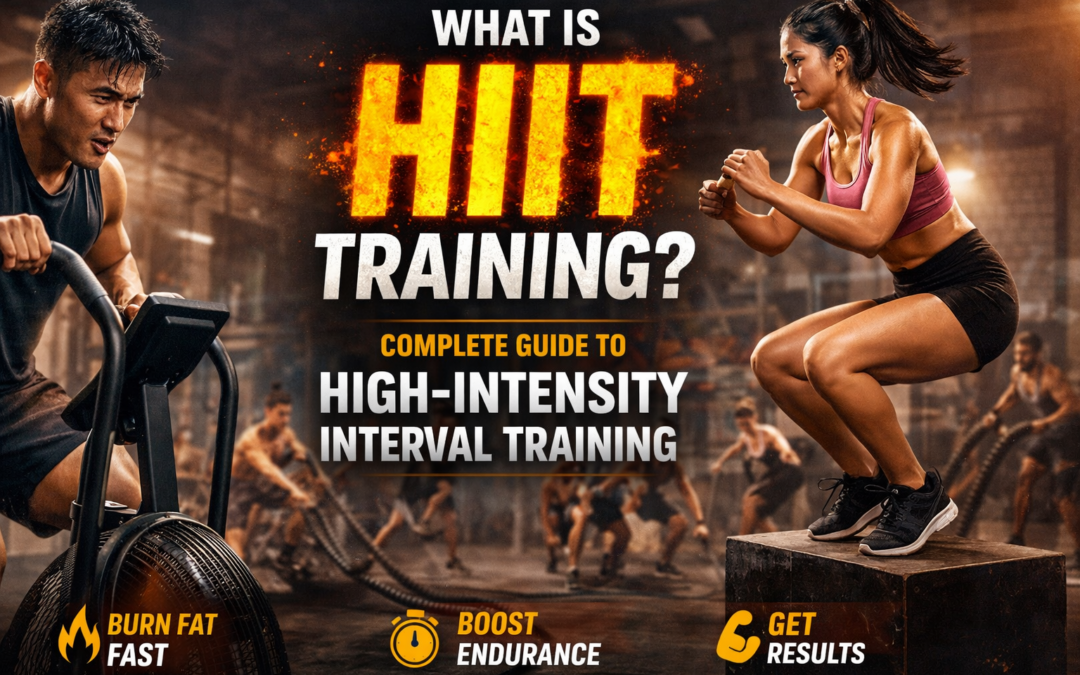
What Is HIIT Training? A Complete Guide to High-Intensity Interval Training

Walk into any modern gym today and you’ll notice a shift. Fewer people are casually walking on treadmills for an hour. Instead, you’ll see short bursts of explosive movement — people sprinting on air bikes, dropping into burpees, grabbing kettlebells, pushing themselves hard for a few seconds, then catching their breath before going again. It looks chaotic, intense, and almost extreme.
This is HIIT — High-Intensity Interval Training — and it has completely changed the way people train.
But HIIT isn’t just another fitness trend. It represents a deeper shift in how we understand efficiency, performance, and results. In a world where time is limited and expectations are high, people want workouts that deliver maximum return in minimum time. HIIT answers that demand.
To truly understand HIIT, you have to look beyond the exercises themselves and see the philosophy behind it.
The Idea Behind HIIT: Doing More in Less Time
At its core, HIIT is built on a simple concept: instead of training longer, you train harder.
Traditional workouts often rely on duration. You go to the gym, spend 45 minutes to an hour doing steady cardio or lifting weights at a moderate pace, and leave feeling like you’ve done “enough.” While that approach works, it isn’t always efficient.
HIIT flips that idea completely.
Instead of maintaining a steady pace, HIIT pushes you into short periods of near-maximum effort. These bursts are intense — the kind where your breathing becomes heavy, your muscles start to burn, and your focus sharpens. Then, just as quickly, you slow down, recover briefly, and prepare to go again.
This constant shift between effort and recovery forces your body to adapt faster than it would under steady conditions. It’s not comfortable — but that’s exactly why it works.
What Happens Inside Your Body During HIIT

When you perform a HIIT workout, your body enters a completely different state compared to traditional cardio.
Your heart rate climbs rapidly, often reaching 80–95% of its maximum capacity. Your muscles demand more oxygen than your body can immediately supply, which forces your system to work harder to keep up. This creates a kind of controlled stress — one that triggers powerful physiological responses.
One of the most important of these responses is known as the “afterburn effect,” or Excess Post-Exercise Oxygen Consumption (EPOC). After a HIIT session, your body doesn’t simply return to normal. Instead, it continues to consume oxygen at an elevated rate as it repairs muscles, restores energy levels, and stabilizes internal systems.
In simple terms, your body keeps burning calories even after you’ve stopped exercising.
At the same time, HIIT activates both slow-twitch and fast-twitch muscle fibers. Slow-twitch fibers are responsible for endurance, while fast-twitch fibers generate power and strength. Traditional cardio mainly targets endurance fibers, but HIIT engages both, creating a more complete and functional level of fitness.
Hormonal responses also play a role. Intense exercise stimulates the release of growth hormone and adrenaline, both of which support fat loss and performance. This is why many people notice faster physical changes when they incorporate HIIT into their routine.
Why HIIT Feels Different
If you’ve ever tried HIIT, you already know it feels different.
There’s a mental component to it. During a sprint interval or a set of burpees, time seems to slow down. Ten seconds can feel like a minute. Your body wants to stop, but your mind pushes you forward.
This mental challenge is part of what makes HIIT so effective. It trains not only your body but also your ability to handle discomfort, stay focused, and push through fatigue.
Over time, this builds resilience — both physically and mentally.
The Appeal of HIIT in Modern Life
One of the reasons HIIT has grown so quickly in popularity is because it fits perfectly into modern lifestyles.
People today are busy. Work, responsibilities, and daily routines leave little room for long gym sessions. At the same time, expectations around appearance, health, and performance are higher than ever.
HIIT bridges that gap.
A well-structured HIIT workout can be completed in 15 to 30 minutes, yet still deliver results comparable — or even superior — to much longer sessions. This makes it ideal for professionals, entrepreneurs, parents, and anyone who needs efficiency.
In places like Thailand, where heat and humidity can make long outdoor workouts uncomfortable, HIIT also offers a practical advantage. Short, intense indoor sessions are far more manageable and appealing.
The Versatility of HIIT Training
 Another reason HIIT stands out is its versatility.
It doesn’t depend on a specific environment or type of equipment. You can perform HIIT using nothing but your body weight, or you can incorporate advanced gym equipment to increase intensity and variety.
A beginner might start with simple movements like jumping jacks, squats, and push-ups. These exercises, when performed in intervals, are more than enough to elevate heart rate and create an effective workout.
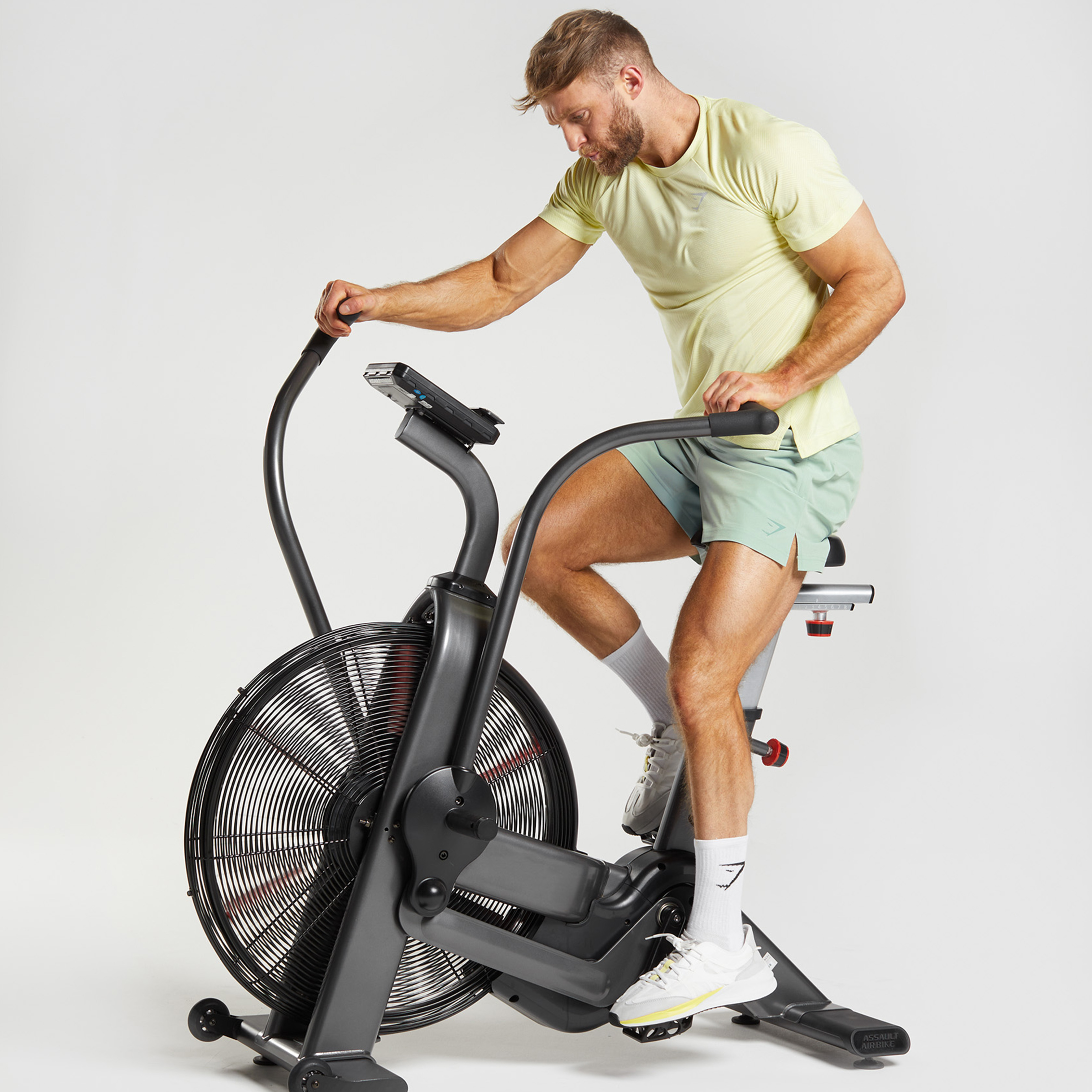
More advanced training might include air bikes, rowing machines, kettlebells, sled pushes, or battle ropes. These tools allow for greater resistance and more dynamic movement patterns, making the workout even more challenging.
Because of this flexibility, HIIT can evolve with you. As your fitness improves, the intensity, complexity, and structure of your workouts can be adjusted to match your level.
The Role of Structure and Planning
Although HIIT may look spontaneous from the outside, effective HIIT training requires structure.
The balance between work and rest is crucial. Too much rest reduces the intensity, while too little can lead to fatigue and poor performance. Finding the right ratio — whether it’s 30 seconds of work followed by 30 seconds of rest, or 40 seconds of work with 20 seconds of rest — is key to maintaining effectiveness.
Exercise selection also matters. A good HIIT session typically combines movements that target different muscle groups, allowing one area to recover while another is working. This keeps the intensity high without overwhelming the body.
Without this structure, HIIT can easily become either too easy or too exhausting — neither of which produces optimal results.
The Importance of Recovery
One of the biggest misconceptions about HIIT is that more is always better.
Because HIIT is intense, it places significant stress on the body. Muscles need time to repair, and the nervous system needs time to recover. Doing HIIT every day can quickly lead to fatigue, decreased performance, and even injury.
Most people benefit from performing HIIT around three to four times per week, with rest days or lower-intensity training in between.
Recovery isn’t just about rest — it also involves proper nutrition, hydration, and sleep. Without these elements, the benefits of HIIT are significantly reduced.
Nutrition: The Foundation Behind Performance

While HIIT is powerful on its own, it does not work in isolation.
Your body needs fuel to perform and recover. Without proper nutrition, even the most intense workouts will fail to deliver results.
Protein plays a central role in muscle repair and growth. After a HIIT session, your muscles are stressed and need amino acids to rebuild. Carbohydrates provide the energy required for high-intensity efforts, while hydration ensures that your body can function efficiently during exercise.
In many cases, especially in fast-paced environments, people struggle to meet their nutritional needs through food alone. This is where supplementation can become useful — helping to fill gaps and support performance.
For those training regularly, combining HIIT with proper nutrition creates a system where each component reinforces the other.
Common Mistakes and Misunderstandings
Despite its simplicity, HIIT is often misunderstood.
Some people assume that intensity means pushing to exhaustion every single session. In reality, effective HIIT is about controlled intensity — pushing hard, but within a structured framework.
Others neglect form in favor of speed, which increases the risk of injury. Quality of movement should always come before quantity.
There is also a tendency to underestimate recovery. Skipping rest days or ignoring fatigue can quickly lead to burnout, reducing both performance and motivation.
Understanding these pitfalls is essential for long-term success.
Why HIIT Continues to Grow
HIIT is not just a passing trend. Its growth reflects a broader shift in how people approach fitness.
It aligns with modern priorities:
- Efficiency
- Results
- Flexibility
- Engagement
It removes the barrier of time while delivering visible outcomes, making it accessible to a wide range of people.
At the same time, it offers enough depth and challenge to keep even advanced athletes engaged. This combination of accessibility and effectiveness is what gives HIIT its staying power.
Final Thoughts
HIIT training represents one of the most efficient and powerful ways to improve fitness. It challenges the traditional idea that longer workouts are always better, replacing it with a smarter, more focused approach.
By combining short bursts of intense effort with strategic recovery, HIIT pushes your body to adapt quickly, improving strength, endurance, and fat-burning capacity.
But like any training method, its success depends on how it is applied. With proper structure, recovery, and nutrition, HIIT becomes more than just a workout — it becomes a system for continuous improvement.
In a world where time is limited but expectations are high, HIIT offers something valuable: the ability to do more, achieve more, and progress faster — all within a fraction of the time.
Ig your in need of machines to train or do you want open your own gym in Thailand visist elite fitness supply thailand